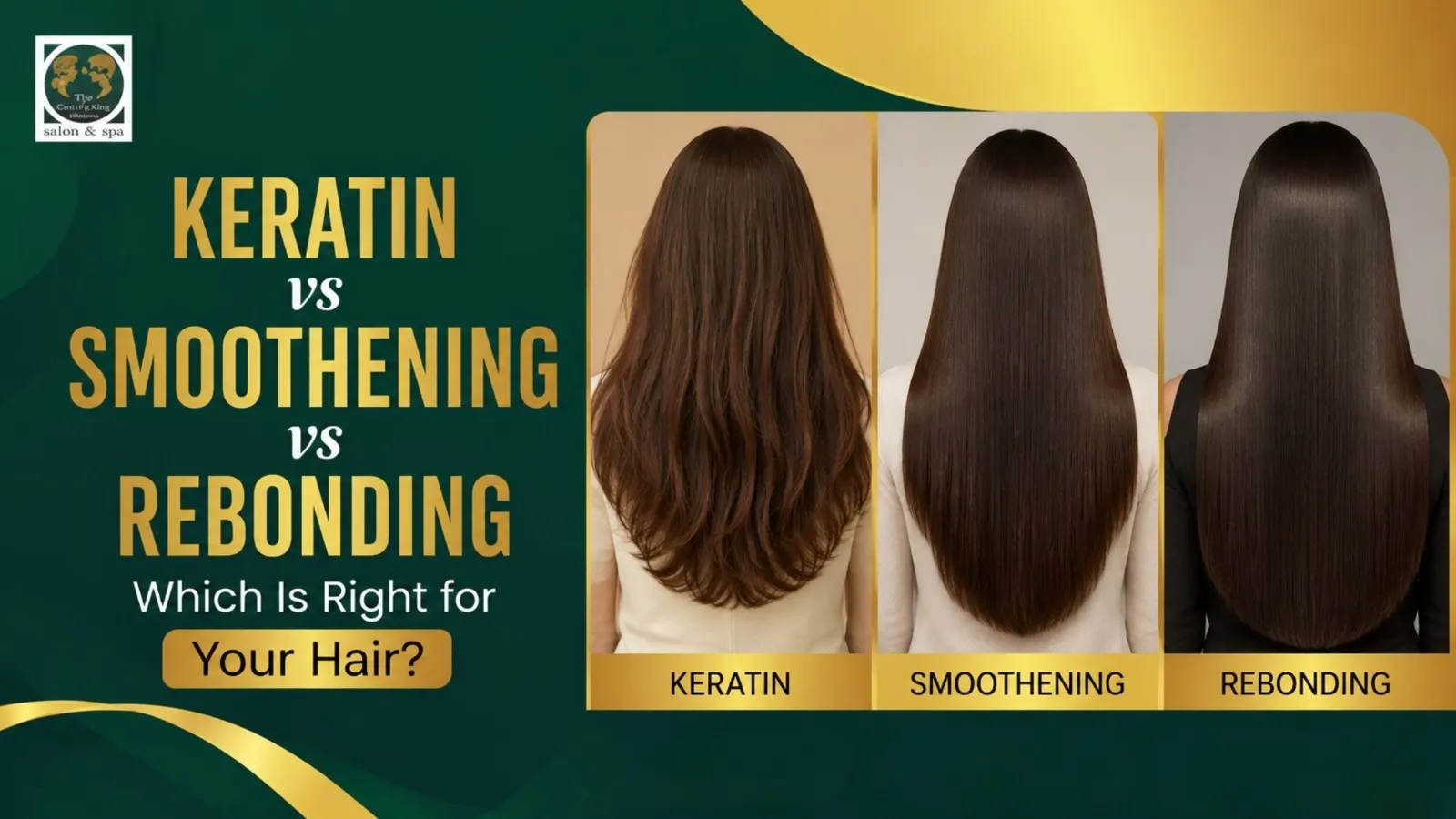
Keratin vs Smoothening vs Rebonding: Which Is Right for Your Hair?
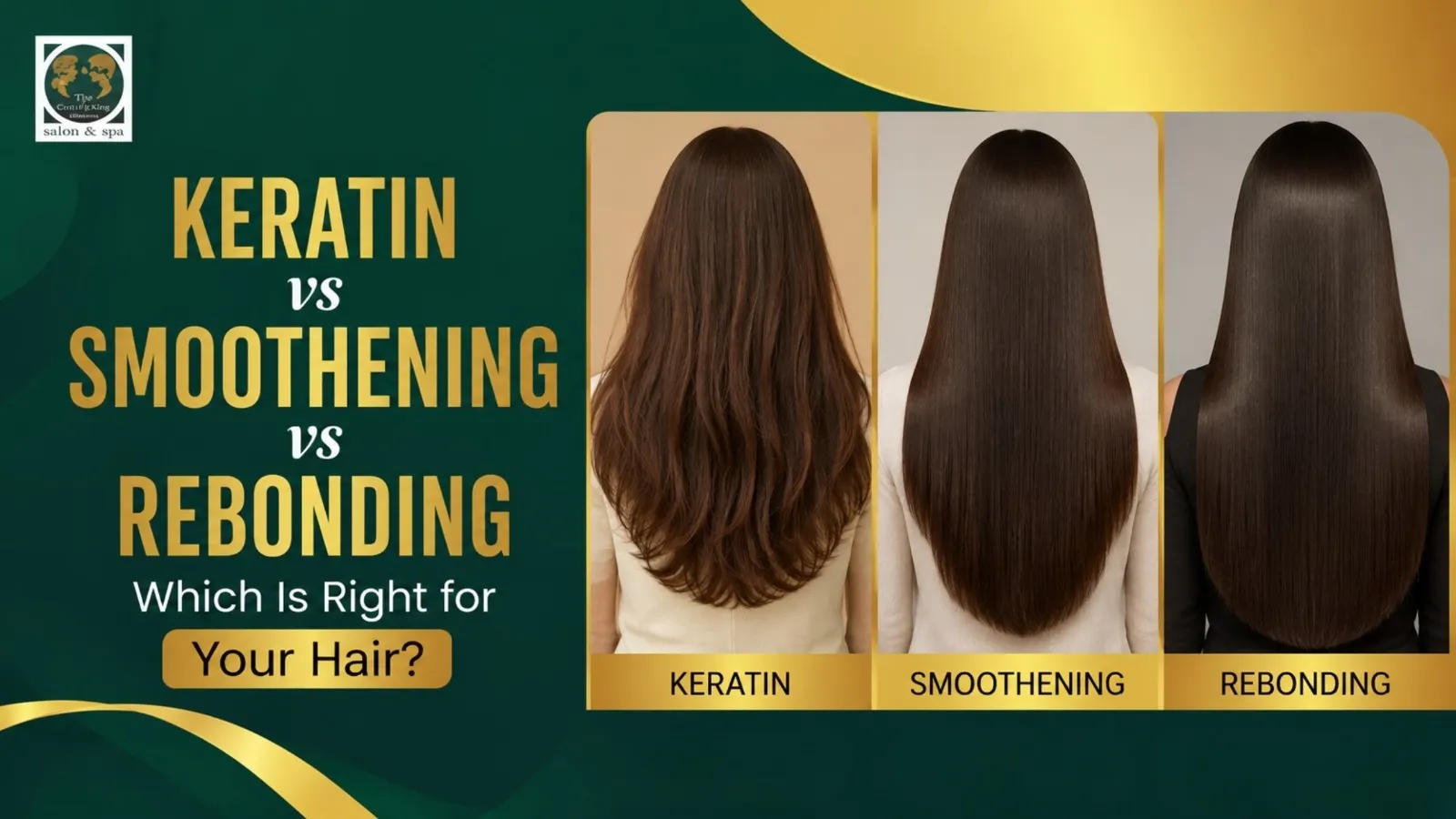
Walk into almost any salon in Patna asking to get your hair straightened and you will likely be offered three different services keratin, smoothening and rebonding. They sound interchangeable, but they are not. Each works on the hair in a completely different way, lasts for a different length of time, and suits very different hair types.
Choosing the wrong one is the reason so many people end up with hair that looks great for six weeks and then turns dry, flat and brittle. This guide breaks down what each treatment actually does, so you can walk into a professional hair treatment salon in Patna knowing exactly what you are asking for.
First, Understand What Makes Hair Frizzy
Frizz is not really about the shape of your hair it is about moisture. Each strand has an outer layer called the cuticle. When it lies flat, hair looks smooth and reflects light. When it is raised or damaged, moisture from the air pushes in and out unevenly, causing the strand to swell and curl in unpredictable directions.
Patna's climate makes this worse than most. High summer heat, a genuinely humid monsoon, and hard water in many parts of the city all work against a flat cuticle. This is why treatments that behave well elsewhere sometimes underperform here, and why aftercare often matters as much as the treatment you choose.
-
The three treatments work at different depths:
- One coats the hair
- One softens its structure
- One rebuilds it entirely
Keratin Treatment: A Protective Coating
Keratin is the protein your hair is already made of. A keratin treatment applies a liquid keratin formula to the hair, which is then sealed in with a flat iron. The keratin fills gaps in a damaged cuticle and forms a smooth outer layer.
Importantly, keratin does not change your hair's natural structure. Curly hair stays curly it simply becomes looser, softer, shinier and far more manageable. For anyone who wants to keep their natural texture while losing the frizz and cutting blow-drying time in half, this is often the ideal choice.
-
Keratin at a glance:
- Best for wavy to moderately curly, frizz-prone hair
- Lasts roughly 2 to 4 months, fading gradually
- Lowest damage level of the three
The gradual fade is a real advantage. There is no awkward demarcation line between treated and new growth, so if you decide not to repeat it, the hair simply returns to normal over time.
Hair Smoothening: Softening the Structure
Smoothening goes a step further. It uses a mild chemical solution to loosen the bonds inside the hair shaft, which is then flat-ironed and neutralised. The result is hair that is noticeably straighter than keratin provides, while remaining soft and retaining some natural movement.
It is best thought of as the middle option. It will not deliver a poker-straight finish, and it is not meant to. What it offers is relaxed, sleek, low-effort hair that still looks like it belongs to you.
-
Smoothening at a glance:
- Best for wavy or lightly curly hair
- Suits first-timers nervous about a permanent change
- Lasts around 4 to 6 months with moderate damage
Hair Rebonding: Permanent Restructuring
Rebonding is the most transformative and the most demanding of the three. A chemical relaxant breaks the disulphide bonds that give hair its curl pattern. The stylist then straightens the hair and applies a neutraliser that reforms those bonds in a new, straight configuration.
This change is permanent on the hair that has been treated and will not revert. As new hair grows, a clear line appears where straight treated hair meets the natural texture, which is why root touch-ups are needed every six to eight months.
-
Rebonding at a glance:
- Best for thick, coarse or tightly curly hair
- Permanent on treated hair; roots need touching up
- Highest damage level; requires committed aftercare
Side-by-Side Comparison
Comparing all three treatments across the key factors makes the differences easier to weigh before booking.
| Factor | Keratin | Smoothening | Rebonding |
|---|---|---|---|
| What It Does | Coats and seals the cuticle | Loosens internal bonds | Breaks and reforms bonds |
| Result | Frizz-free, texture retained | Relaxed and sleek, some movement | Poker straight |
| Duration | 2–4 months | 4–6 months | Permanent; roots every 6–8 months |
| Grow-Out | Fades naturally, no line | Soft line | Visible demarcation line |
| Damage | Low | Moderate | High |
| Best Hair Type | Wavy to curly, frizzy | Wavy, lightly curly | Thick, coarse, tightly curly |
| Salon Time | 2–3 hours | 3–4 hours | 4–6 hours |
| Cost | Contact us | Contact us | Contact us |
How to Choose in One Question
The simplest way to narrow the decision is to ask yourself one thing: do you want to keep your texture, or lose it?
-
Use this as a guide:
- Keep your curls or waves and stop fighting frizz choose keratin
- Want meaningfully straighter but still natural hair choose smoothening
- Want genuinely straight hair and can commit to maintenance choose rebonding
Then run a second check on your hair's current condition. If your hair is already colour-treated, bleached, breaking or shedding, rebonding is usually the wrong starting point. It is better to repair the hair first — our hair treatment services in Patna include bond repair, deep conditioning and protein treatments designed to bring damaged hair back to a state where it can safely take a chemical service. We explain the recovery process in more detail in our guide to repairing damaged hair naturally.
What None of These Treatments Will Fix
Being honest about the limits of each treatment saves a lot of disappointment later.
-
These treatments do not resolve:
- Hair fall — none of the three stops shedding, and rebonding on weak hair can worsen breakage
- Split ends — chemicals cannot repair a split strand; these need to be cut first
- An unsuitable haircut — straighter hair exposes shape more, not less
- Volume loss — all three flatten the hair to some degree
Hair fall needs scalp-level care, which we cover in our practical guide to healthier hair. Because straight hair reveals shape so clearly, it is worth booking a haircut first, and if your hair is on the finer side, our post on choosing the right haircut for thin hair is a useful starting point.
Aftercare That Actually Protects Your Investment
The treatment is only about half the outcome. The rest depends on what you do over the following months.
-
Key aftercare steps:
- In the first 72 hours, avoid washing, tying, tucking or clipping the hair
- Switch to a sulphate-free shampoo to avoid stripping the treatment
- Manage hard water with a shower filter where mineral content is heavy
- Use heat protection, as treated hair is more vulnerable to heat damage
It also helps to book a periodic nourishing service. A hair spa or deep conditioning session every four to six weeks keeps treated hair from drying out. Our spa and wellness services include head massage and scalp therapy that pair well with any of these treatments.
Conclusion
Keratin, smoothening and rebonding solve frizz at three different depths, last for different lengths of time, and suit very different hair types. The right choice depends on whether you want to keep or lose your natural texture, along with your hair's porosity, colour history and current condition — factors that are difficult to judge from a photo or a description alone.
Booking a consultation with The Icon Studio on Bailey Road, Patna, allows a stylist to assess your hair and advise plainly which treatment fits, which does not, and what your hair needs to be ready for it. Call +91-9942289065 or book an appointment to plan the right approach for your hair.